Standing Is a Skill
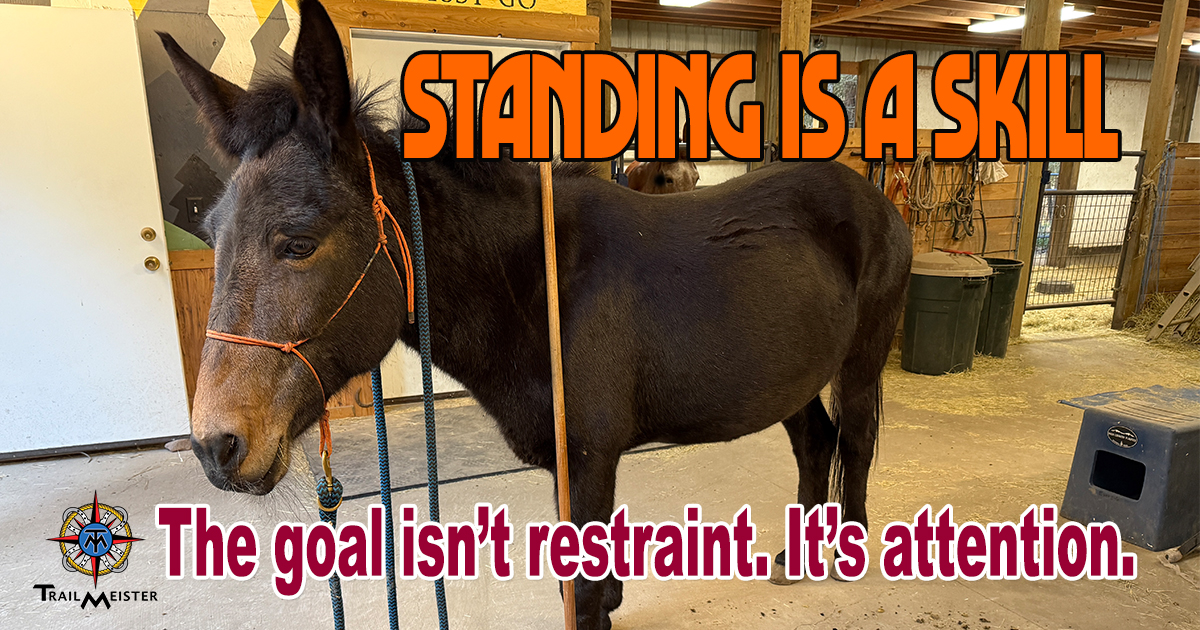
I don’t like tying my horses and mules while I’m grooming and saddling. Most of the time, I simply drape the lead rope over their neck. My thinking is pretty simple. If my critters can’t stand quietly at home, where everything is familiar and not much is going on, why should I expect them to stand quietly when we’re away from home and the world gets interesting?
A trailhead can be a busy place. Trailers are pulling in. Somebody unloads down the way. Maybe a dog runs past. Meanwhile, I expect my mule to stand there while I pick his feet, brush him, throw on a saddle, and get everything ready for the ride. I’d rather teach that at home than discover at the trailhead that we have a problem.
Teach Your Horse to Stand Quietly at Home
When I’m grooming or saddling, I’ll usually drape the lead over the animal’s neck where it’s close enough that I can grab it quickly if I need to. As long as my horse or mule stands quietly, I leave him alone and go about my business.
Standing is the easy answer. But eventually a foot will move. Maybe something catches his attention. Maybe the dog runs by. Maybe Ruger just decides that standing still wasn’t what he had in mind.
That’s when I grab the lead and we go to work. We’ll make a few turns to the right and left. I’ll ask him to pivot around his front feet and then around his hindquarters. We’ll back up a few steps and come forward again. These aren’t complicated maneuvers, but I do expect them to be done correctly. I’m not drilling for perfect. Instead I’m asking him to pay attention and respond when I ask.
Groundwork Is About Attention, Not Exhaustion
More importantly, I’m not trying to tire him out. A horse or mule can move his feet for a lot longer than I want to move mine. Trying to exhaust one into behaving seems like a poor bargain from my end of the lead rope.
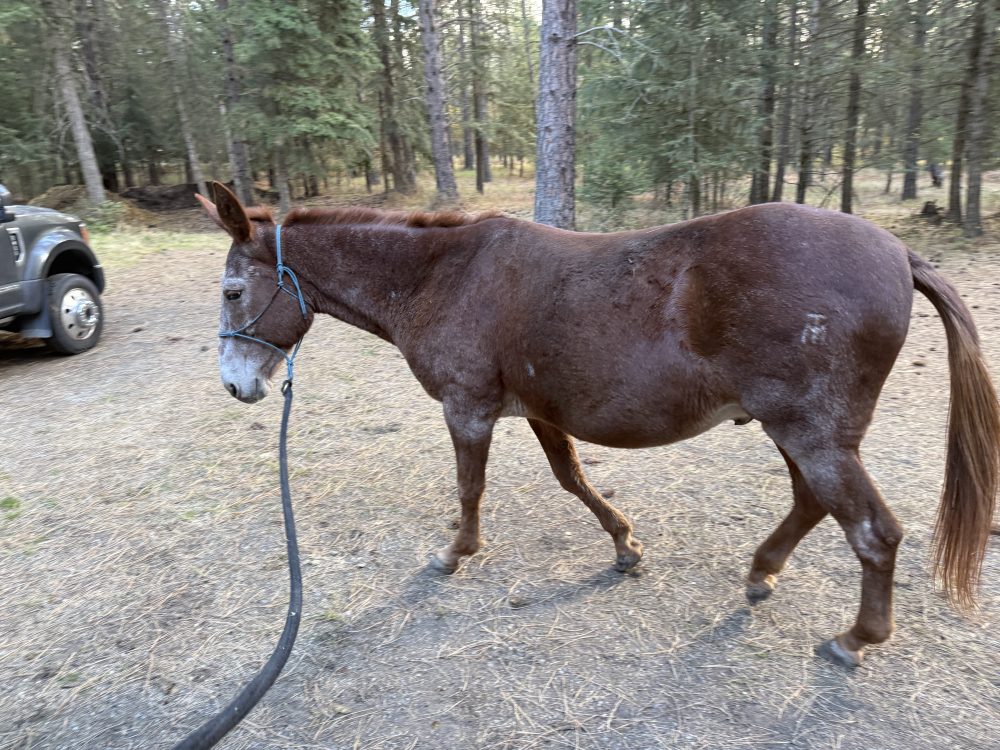
What I do want is his attention. When I ask for a turn, I expect him to listen. When I ask the hindquarters to move, he has to think about where his feet are going. When I change direction, he has to pay attention to me instead of whatever caught his eye across the way.
Once I have his mind back, we stop. Then I go back to picking feet, brushing, or saddling.
That part is important. The groundwork isn’t punishment for moving. I’m not mad at him, and there’s no reason to make a big production out of it. I simply make standing quietly the easiest thing we’re doing now. If he’d rather wander around, that’s fine, and thank you for the opportunity. I have plenty of things to do that involve wandering with a purpose. Before long, standing nicely while I fuss with a saddle starts looking like a pretty good option.
A Trail Horse Still Needs to Know How to Tie
I do think every trail horse and mule should know how to tie. There are times when tying is necessary, and an animal that panics when it feels pressure on a halter can be dangerous to itself and everyone nearby. My critters need to know how to stand tied quietly at the trailer and on a highline when we’re camping.
But knowing how to tie and needing to be tied every time I handle them are two different things.
What I’m looking for is an animal that understands that when I park his feet, I expect them to stay parked until I ask for something else. That becomes even more valuable when we leave home.
Practice Before You Get to the Trailhead
The first time you ask for this shouldn’t be at a crowded trailhead when your riding buddies are saddled and waiting. That’s asking a lot of both you and your horse. At home, there’s no hurry. If your horse walks off while you’re brushing him, you have the time to quickly pick up the lead, move his feet, regain his attention, and try again. And again, if necessary.
Eventually, I want to be able to walk around my mule, pick up all four feet, brush him, saddle him, adjust tack, and generally putter around without him deciding that he has somewhere better to be. The lead rope over his neck isn’t what keeps him there. His mind being with me is.
For more of my ponderings on trail riding and camping with livestock, give me a visit at www.TrailMeister.com or pick up one of my books on Amazon.