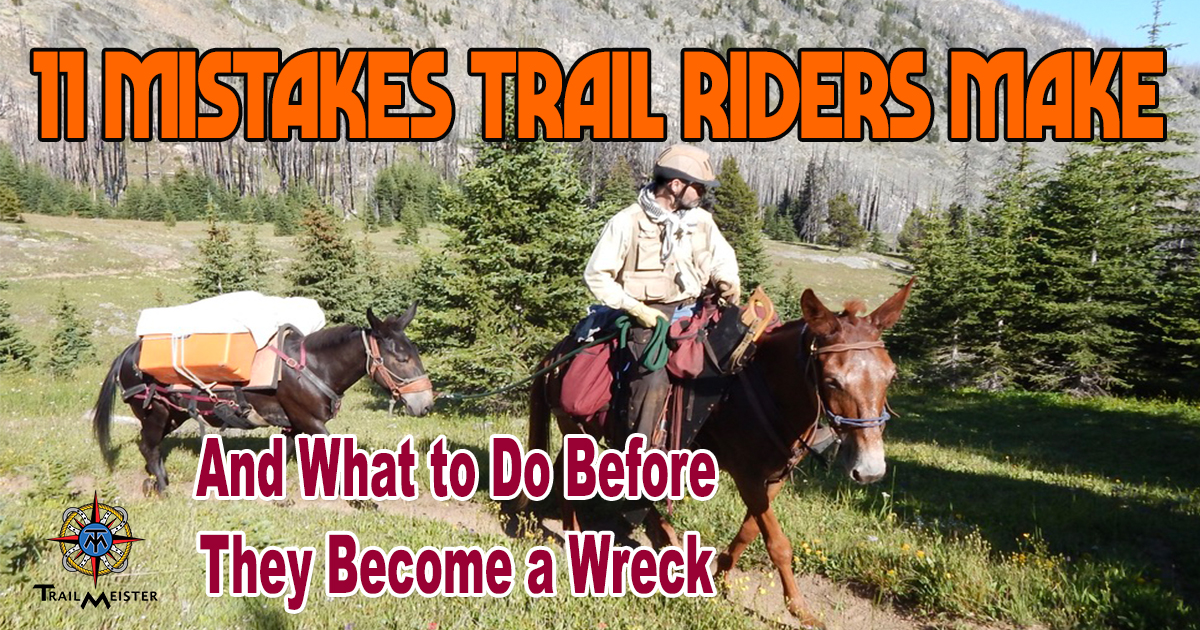
11 Mistakes Trail Riders Make – And What to Do Before They Become a Wreck
Most trail-riding problems don’t start when everything goes wrong. They start earlier, with seemingly small decisions. We think the horse will cross a creek, or assume the trail will look the same as it did last year. Usually, those decisions don’t amount to much, but occasionally, several of them come together and suddenly we have a more interesting day than we planned.
1. Waiting Until the Trail to Train for the Trail
We expect our horses to stand quietly, cross water, walk over bridges, and deal with all sorts of things once we leave home. Those are skills that are much easier to teach in familiar surroundings than at a busy trailhead or halfway up a mountain. I think of home as the classroom and the trail as the test. The coming winter months are a great opportunity to work on what will make next summer’s rides easier.
2. Overestimating Our Horse’s Fitness
Spring can be deceptive because we remember the horse we rode last October while forgetting he may have spent several months doing nothing more strenuous than walking from the hay pile to the water trough. Distance and rough terrain ask a lot from an animal. Start with shorter, easier rides and gradually increase the workload to give our horses and mules time to rebuild their stamina before we ask for a long day in the saddle.
3. Overestimating Our Own Ability
Sometimes the animal is perfectly capable, and we’re the weak link. Terrain, weather, and the people we’re riding with all matter. Experience can sometimes work against us because familiarity breeds complacency. We’ve ridden steep country and crossed rivers before, so we assume we can do it again. Sometimes the important question isn’t whether we can do something, but whether doing it today, in these conditions, is a good idea.
4. Assuming the Trail Will Be What We Expect
Trees fall, bridges wash out, fires close areas. Checking conditions before leaving home helps, but conditions can change quickly, and sometimes online information isn’t current. I’ve turned around because of snow, downed timber, and bad roads. Having a plan is important, but so is being willing to change it when we need.
5. Depending on the Phone
I use my phone constantly. Phones are wonderful tools until there’s no service, the battery dies, or it breaks. Basic map and navigation skills still have a place in our toolbox, instead of simply following a line on a screen. Technology helps a lot in the backcountry, but I don’t want my ability to find my way home to depend entirely on a battery.
6. Not Telling Somebody Where We’re Going
Before a ride, someone at home should know where we’re parking, where we intend to ride, who is going with us, and when we expect to return. It may seem unnecessary at times, but if a ride becomes eventful and somebody needs to look for us, knowing where to start looking can make a difference.
7. Pressing On When We Should Turn Around
Maybe the weather is changing, or the trail ahead taking longer than expected. It’s tempting to keep going when the lake, overlook, or campsite is just another mile ahead, especially after we’ve already invested hours getting there. Turning around doesn’t mean the ride failed. Sometimes it’s the best decision available with the information we have at the time. I’d much rather wonder what was around the next bend from the comfort of home than discover I should have turned around two hours earlier.
8. Forgetting That We’re Sharing the Trail
We share trails with hikers, bikers, and plenty of people who have never been around a horse. Their impression of equestrians will be shaped by us, so courtesy matters. That may mean having a friendly conversation and cleaning up after our animals. Like it or not, we’re all ambassadors for horse and mule riders on public lands, and how we behave can make the next encounter more pleasant.
9. Being Unprepared for the Little Emergencies
Not every problem requires a life flight helicopter. Thankfully most don’t. A minor cut or a broken piece of tack require only enough knowledge and equipment to handle the problem until we get home. I carry first-aid supplies and a few basic tools and know how to use them. The goal isn’t to prepare for every disaster imaginable; it’s to handle common problems long enough to get ourselves and our animals safely to where a professional can arrive.
10. Thinking the Ride Starts When We Get in the Saddle
The truck and trailer are every bit as much a part of trail-riding safety as anything we carry in our saddlebags. Tires, brakes, bearings, floors, and hitch components aren’t particularly exciting. But neither is sitting beside the highway with horses in the trailer because something we should have checked at home. For me, preparing for a trail ride starts in the driveway, not at the trailhead.
11. Not Belonging to a Trails Advocacy Organization
Trails don’t maintain themselves. Someone has to clear blowdowns, work with land managers, and attend the meetings where decisions about equestrian access are made. If we enjoy riding public trails, we each have a responsibility to support the people doing that work. Not everyone can spend a weekend swinging a Pulaski, but we can join the organizations doing the work, contribute when we’re able, and show up when they need our voices.
None of this is meant to take the adventure out of trail riding, quite the opposite. Some of my favorite memories come from trips that didn’t go exactly as planned. Preparation gives us more options when the unexpected happens and, hopefully, the judgment to recognize when the plan needs to change.
The goal isn’t to avoid adventure. It’s to come home from it.
For more information on trail riding and horse camping, as well as the world’s largest guide to places to ride and camp, please visit TrailMeister.com. You can also find my books The ABCs of Trail Riding and Horse Camping, Daily Wisdom from the Saddle, It’s a Cinch!, and my newest book, Going Is Optional. Stopping Is Not. A Horse Owner’s Guide to Trailer Safety, Towing, and Hauling. All are available on Amazon
.