

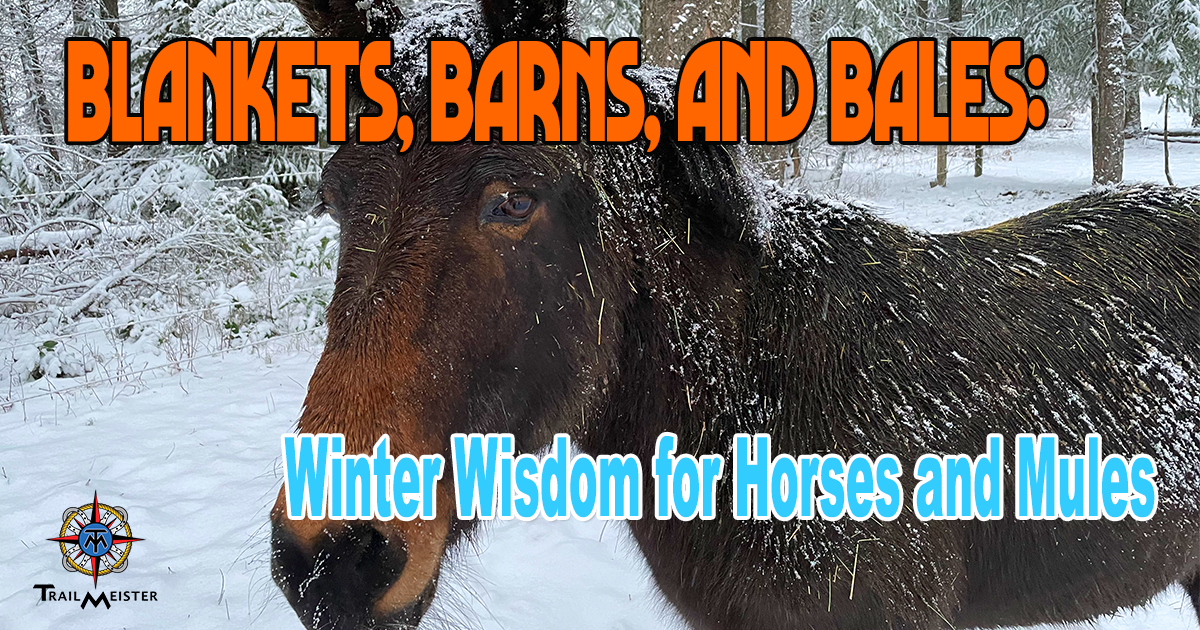
It’s November, and the days are getting shorter. The air has a damp, bone-deep chill that seeps in before the first real snow. As I write this, the thermometer hovers around thirty degrees. While I’m inside with a mug of coffee and the woodstove humming, Ruger and the Bean are outside, content, frost dusting their backs, unbothered by the cold.
Every fall, as we head into winter, I find myself wondering what many horse and mule owners ask this time of year: Should I blanket them?
Rather than hard-and-fast rules, I’ve learned to rely on guidelines, practical ways to decide what’s right for each animal and each situation.
How Equines Stay Warm
Before reaching for the blanket, start with the basics. Horses and mules are remarkably well equipped for winter. You can’t judge their comfort by how chilly you feel.
1. Eating = Heating
The primary heat source for an equine isn’t a blanket, it’s hay. Digestion in the hindgut acts like a furnace, producing heat as microbes break down fiber. On frigid nights, the best “blanket” you can offer is an extra flake or two of good-quality hay. That furnace also needs water, so keep it ice-free and, if possible, not ice-cold.
2. Size and Heat Retention
Larger animals hold heat longer, it’s basic physics. Smaller or thin animals lose warmth faster and may need more feed or extra shelter to stay comfortable.
3. Hair Loft: Nature’s Blanket
Those tiny muscles at the base of each hair shaft lift it upright, trapping a layer of warm air against the skin, the same principle that keeps a sleeping bag warm. If you press that hair down with a heavy or poorly fitted blanket, you can make your mule colder. Sometimes their natural coat outperforms anything you can buy.
When Nature Needs a Hand
In an ideal world, healthy animals with thick coats, plenty of hay, and shelter from wind and wet, blankets are rarely needed. As the veterinarians at Texas A&M remind us:
“For the vast majority of horses, it will never be too cold for them to live outside with no blanket. Those that would benefit are thin, debilitated, ill, or have no natural hair coat.”
But perfect conditions are rare. Here are times when a blanket can be helpful:
- The animal is shivering or visibly uncomfortable
- Older, underweight, or recovering from illness
- Clipped for showing or heavy work
- Thin coated due to breed, lighting, or management
- Lacks shelter from wind and rain
- Recently moved from a warmer climate
In these cases, a properly fitted, waterproof, breathable blanket can make all the difference.
Wind, Rain, and Reality
For most horse owners, moisture is the real enemy. Dry cold is easy. Wet and windy isn’t. In places like my home in the Pacific Northwest, a steady 40-degree drizzle can chill an animal faster than a 20-degree snowfall. Snow can insulate; cold rain mats the coat and strips away that warm air layer.
A good three-sided shelter is often better than a blanket, giving your animals the freedom to step out of the weather when they choose. Shelter plus hay usually beats any turnout rug.
When You Do Blanket
If you decide to blanket, do it thoughtfully. Fit matters. A blanket that’s too tight can rub shoulders and withers; too loose can shift or tangle. Waterproofing and breathability are essential; nothing chills a horse faster than being wet under a blanket.
Check daily for rubbing, sweating, or trapped moisture. Remove the blanket on warmer days to let the coat fluff up again. Remember, blanketing is a management decision, not a fashion statement.
Talk with Your Veterinarian
Every horse and mule is different. Age, body condition, workload, and health all play a role in how well they handle cold weather. If you’re unsure about your animal’s specific needs, or if they have health concerns that might affect thermoregulation, talk with your veterinarian. A short conversation now can prevent serious problems later, and your vet can help you tailor a winter care plan that includes nutrition, shelter, and blanketing (or not) for your individual animals.
The Takeaway
Blanketing isn’t about temperature alone, it’s about context. A healthy mule with a thick coat, plenty of roughage, and shelter from the elements will stay comfortable in weather that sends us running for another layer. But a wet, wind-blown, or older animal may appreciate a little extra help.
Before you reach for the blanket, ask yourself:
- Is my animal shivering?
- Is he thin, elderly, or recovering?
- Does he have shelter and free-choice hay?
If all those answers are “no,” he’s probably happier in his natural coat. If one or more is “yes,” that’s your sign to lend him a little help.
Winter care doesn’t have to be complicated, it just takes observation, consistency, and good judgment. Watch your animals, know their normal, and let them tell you what they need. They’re honest that way.
For more practical advice on caring for your horses and mules, plus North America’s largest directory of equine trails and camping areas, visit www.TrailMeister.com.
Ready to dig deeper into life on the trail?
Grab a copy of my bestselling books:
The ABCs of Trail Riding and Horse Camping, a trusted guide for trail riding and horse camping with confidence;
It’s a Cinch!, a hands-on manual for crafting your own mohair cinches; and
Daily Wisdom from the Saddle, a collection of equine-inspired reflections for every day of the year.
All are available on Amazon or through TrailMeister.com.