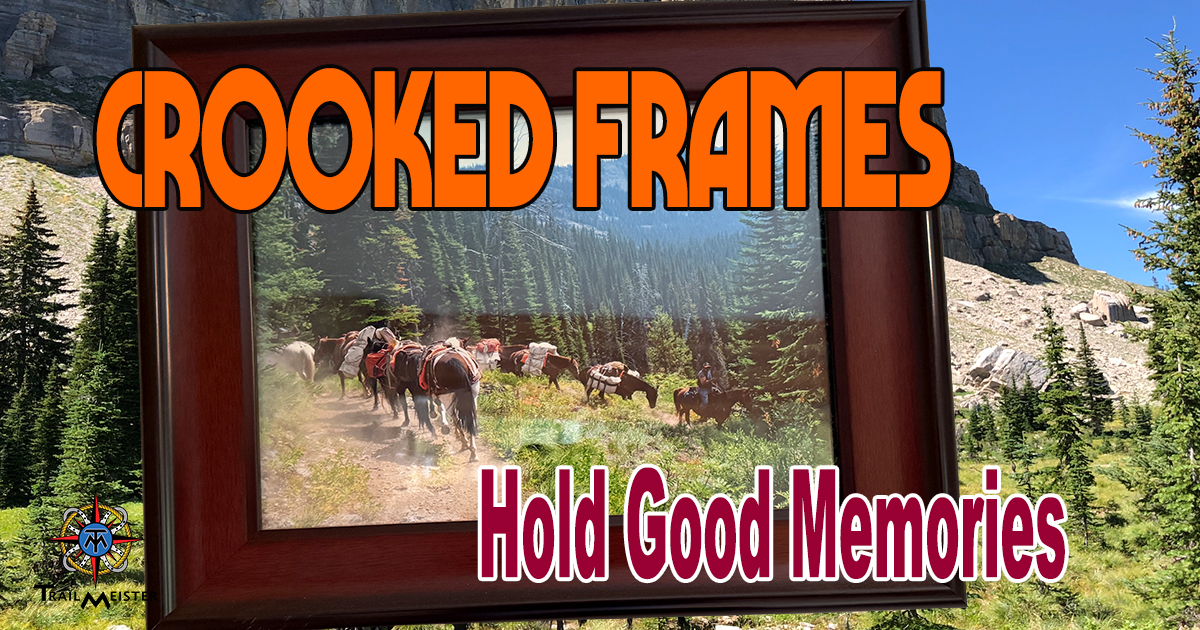
I’ve got a picture on my wall that leans a little. Not enough that anyone else would notice, but enough that I do. Every time I walk past it, there’s a quiet urge to straighten it, bring it back into line, make it look the way it’s supposed to. I leave it.
That picture came from a trip that didn’t go according to plan. Weather moved in and the grazing wasn’t what we expected. We adjusted. Changed routes. Shortened days. Let go of what we thought the trip would be so we could work with what was in front of us. It wasn’t the trip we intended when we loaded the trailer, but it was the trip we got, and it turned out to be a good one.
You’ve been told things should come together clean. Straight lines. Square corners. Do it right and everything will line up and stay that way. It’s a nice idea. It doesn’t hold up.
The high country doesn’t care about your plans, and mules don’t care about your timeline. Life doesn’t spend much time trying to make things neat either. Stay at it long enough and you’ll see that most things worth doing don’t stay perfectly aligned.
I’ve had seasons where my own lines moved more than I wanted them to. Some were obvious. Others were quieter, just a slow tilt over time that didn’t seem like much until you stepped back and looked at it. I’ve let certifications lapse that I spent years earning. On paper, that looks like something important was set aside.
There’s truth in that, but it’s not the whole story. Those same years were full of work that mattered. Clinics across the country. Long days walking people through problems they didn’t know they had until we started looking closely. Writing that forced me to think about what I believe, instead of what I was trained to repeat. I traded one kind of validation for another. Less tidy and less official, but useful when things go sideways. Some moments don’t hang on a wall. They still count.
You’ve seen the same pattern, especially when it comes to working with other people. I’ve built things with good partners that didn’t last. Some ended clean. Some didn’t. None of them started with the intention of coming apart, but direction matters, timing matters, and what you’re building has to fit for everyone. Sometimes it doesn’t.
You can feel it when things start to drift. Conversations land a little off. Expectations stop lining up. What used to feel easy starts taking effort in the wrong places. You can push through that and make it look right from the outside, but that rarely fixes the problem. Most of the time, it delays a decision you already know you need to make.
Walking away leaves questions. What did you miss? What could you have done better? Those answers matter if you’re honest about them. They make the next decision better, even if the last one was harder than you wanted it to be. The work improves, even if the path getting there wasn’t straight.
You go to clinics looking for a clean answer. A straight line from where you are to where you want to be. The perfect animal. The perfect setup. The right sequence that makes everything click. That’s not how it works.
What shows up instead is an animal with a history you didn’t write and a rider trying to figure out where the holes are. Some of the best mules I’ve worked with had edges. A little brace. A tendency to look harder at things than you’d like. Not broken, just not finished. Given time and consistency, they get better. So do you.
Your tack tells the same story if you’re willing to look at it. I’ve had cinches come off looms that wouldn’t impress anyone at first glance. Lines not quite even. Small inconsistencies that show where the hands that made them slowed down and figured something out. But you put that cinch on a mule and head down the trail, and it does exactly what it’s supposed to do. It holds. It distributes pressure and becomes part of a system you can trust.
You measure your life against a cleaner version than the one you’re living. One where credentials stay current, partnerships last, and plans unfold the way you drew them up. That version doesn’t leave much room for reality, and reality is where most of the learning happens.
Trips get shortened. Plans change. People head different directions. You learn something you didn’t expect, sometimes at the cost of something you thought you needed. If you’re paying attention, you start to see that what remains is still good. Still usable. Still worth building on.
That picture on my wall leans a little. I could straighten it, but it would lose something if I did. As it is, it tells the truth. Crooked frames still hold good memories. Most of the time, they’re the ones that matter.