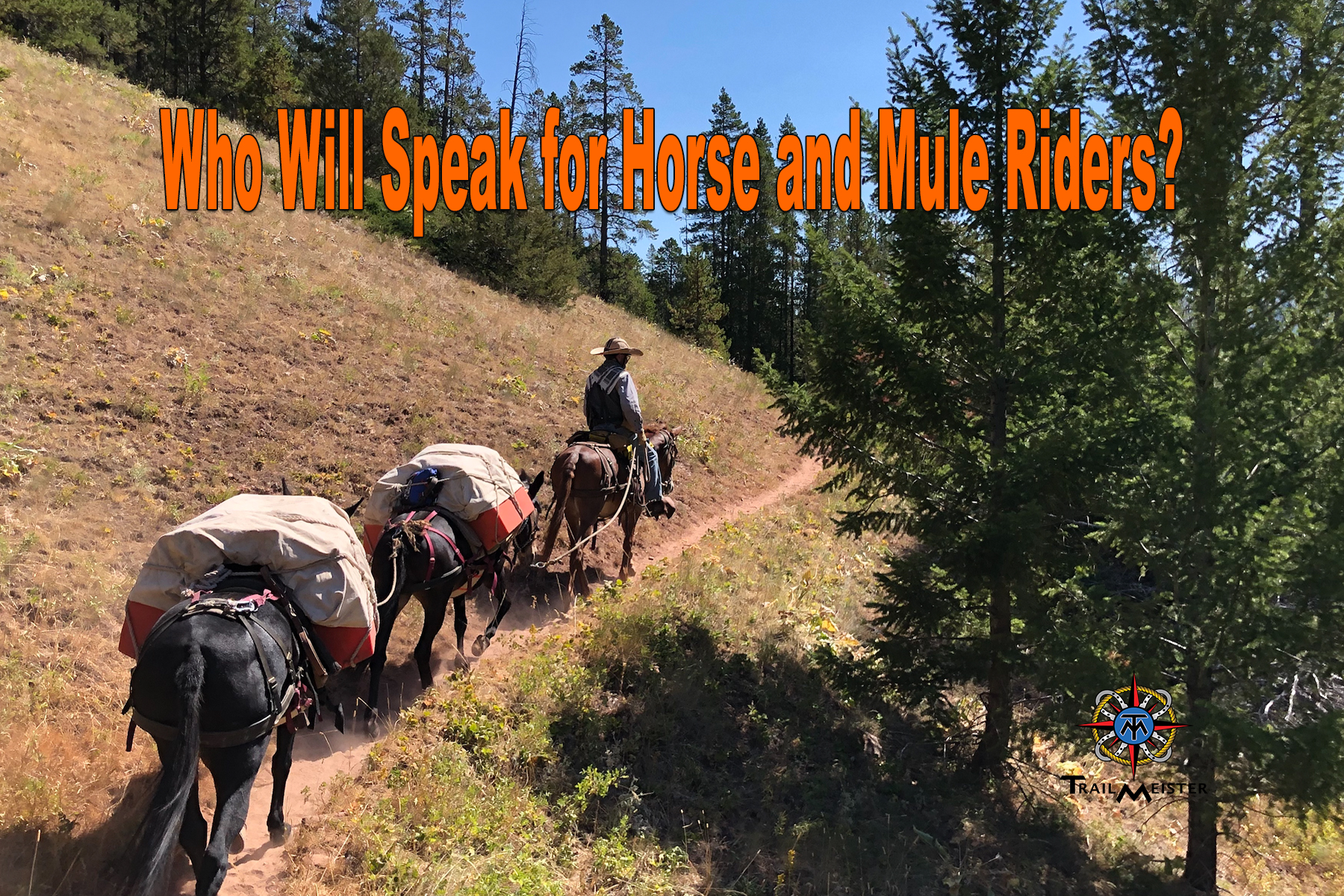
Advocacy simply means supporting a cause. For us, that cause is keeping trails and public lands open to horses and mules. Every week, I hear about another trail or riding area being closed to stock. It’s difficult to watch places that horse and mule riders have enjoyed for generations disappear one by one.
Let’s face some tough facts. Joni Mitchell was right when she sang, “They paved paradise and put up a parking lot.” Every day, open land is lost to new developments. Meanwhile, land managers are trying to care for more areas than their budgets and crews can handle. Since horse and mule riders are a small group, we can’t expect others to speak up for us or assume our favorite trails will always be there.
Join an Equine Advocacy Organization
A good first step to keeping our trails open is joining a group that represents horse and mule riders. Local riding clubs, state horse councils, Back Country Horsemen chapters, and land-conservation groups can bring many voices together so they’re harder to ignore. Your membership dues support this work. But just paying dues and putting a sticker on your horse trailer isn’t enough.
Get Involved Before a Trail Is Threatened
It’s best to get involved before a trail is at risk of closing, since it’s much harder to change decisions after they’re made. Get to know the people who manage your riding areas, so your first conversation isn’t during a crisis. Read management plans when they come out and respond when agencies ask for comments. If you spot a problem on the trail, report it clearly and politely. When you can, join a trail crew, cleanup day, or other volunteer project to help care for the places you love.
Make Your Public Comments Count
When you submit a comment, be specific. Saying “Don’t close our trails” tells a land manager that you’re unhappy, but it doesn’t give them useful information. Explain which trail or facility matters to you, how horse and mule riders use it, what would be lost if access changed, and whether another solution might address the problem. You don’t need to sound like a lawyer or write a novel. You do need to explain the issue calmly and clearly and show that you know and care about the place. And remember, comments shouldn’t be limited to problems. A few words of thanks for a well-maintained trail, a helpful employee, or a decision that preserves access can help build the goodwill we may need later.
Every Ride Is an Act of Advocacy
Advocacy isn’t just about meetings and newsletters. It happens every time we ride. When we leave gates as we found them, clean up camp, follow the rules, and treat other trail users with respect, we show that horses and mules belong on the trail. But if we leave manure at the trailhead, or damage trails we’re sending the wrong message. Like it or not, we might be the only equestrians someone meets that day, and our actions will shape their views of all horse and mule riders.
Many worthwhile organizations are working to protect trails and equestrian access. Back Country Horsemen is one choice, but it’s far from the only one. State horse councils, equine land-conservation organizations, and local horse and mule clubs all protect access in different ways. The organization’s name matters less than the work it does and whether its members are willing to help.
Ask How You Can Help
If you already belong to an equine organization, find out what it’s doing and ask how you can help. And if advocacy has slipped down its list of priorities, hold their hooves to the fire, because organizations represent us best when their members remain involved.
Trails stay open because people show up, speak thoughtfully, and help with the work, so if we want a place for our horses and mules on tomorrow’s trails, we need to be among those people.
For more practical information about trail riding, horse camping, and protecting the places where we ride, visit TrailMeister.com, home to the largest guide to horse trails and camps in North America. You can also find my books on Amazon.