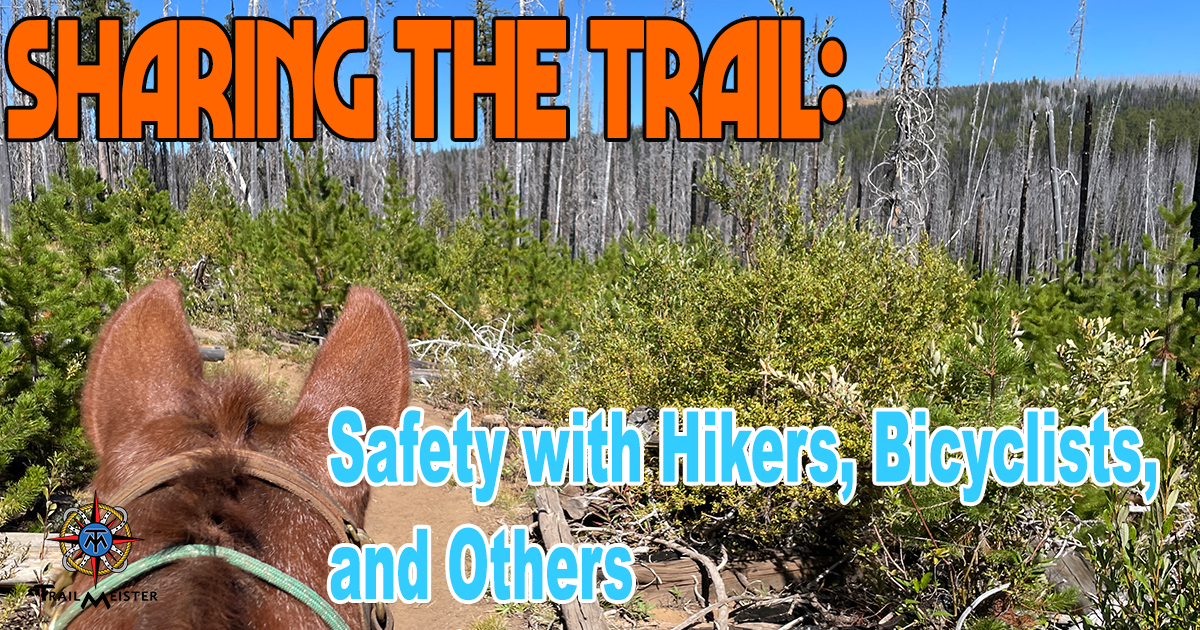
One truth is constant: we do not have the trails to ourselves. Riders, hikers, bicyclists, runners, and wildlife watchers all share the same spaces, and how we handle encounters can mean the difference between a good ride and a dangerous incident.
Most interactions are positive. I have shared a cold soda with a weary through-hiker who nearly wept with gratitude. I have swapped fishing reports with an angler while my mule craned his neck toward the trout on the line. These are the moments that make trails special. But sometimes things go sideways. Horses can spook at a bicycle gliding up from behind or leap uphill when startled by trekking poles. What feels casual to another trail user can become a scramble for us.
Understanding the Horse’s Mind
A startled horse is more likely to flee uphill than downhill. That is why riders should always ask other trail users to step to the downhill side. From there, a horse sees them as less threatening and the risk of collision drops.
A calm voice reassures horses, while a helmeted cyclist in mirrored sunglasses can look an awful lot like Darth Vader bearing down. Most hikers and bikers have no idea. Many have never been around horses at all. From their perspective, a mounted rider looks big, strange, and imposing. If you have lived in an urban environment, suddenly sharing a narrow trail with half a ton of hooves and attitude can feel overwhelming.
The Burden, and the Opportunity
My mentor, Ed H., taught me the best way to bridge that gap: start with a “Howdy.” Ed was a champion of greetings. His quick hellos often turned into half-hour trail-side conversations. He knew every encounter was a chance to build goodwill, and kindness could turn strangers into allies.
As riders, we are responsible for safety. We manage prey animals with a flight instinct, so we must lead the interaction. Ed’s method made it simple: smile, say hello, and clearly explain what needs to happen. A calm “Howdy, could you step to the downhill side for me?” is often all it takes.
Three Simple Steps
Ed never complicated things. These basics still apply:
Stop your horse and take control.
Talk to your animal and the other user. Ask: “Can you step to the downhill side and keep talking as we go by?”
Move Past only once the person is downhill and your horse has room.
It is simple, but it requires us to be proactive. Most hikers and cyclists do not know that stepping uphill can be dangerous. Asking prevents confusion and keeps the trail safe.
A Culture of Courtesy
For Ed, a “Howdy” was more than politeness—it was education. If we want safer trails, we need to meet other users where they are: on the trail, in their clubs, and in their communities. A quick hello or showing up for a trail-maintenance day can open doors. If even one person learns how to act around horses, it may prevent an accident.
Trails are shared. None of us own them, and all of us have a stake in keeping them safe. Ed’s half-hour “Howdys” may not be practical for everyone, but the spirit behind them is. A smile, a wave, and a request to step downhill can turn tension into safety. More importantly, they build a trail culture of courtesy that ripples outward.
As equestrians, we have been given the gift of seeing the land from the back of an animal. With that privilege comes responsibility. Share your knowledge with patience and respect. Keep yourself safe, and help ensure future riders, hikers, and cyclists inherit trails rooted in goodwill.
So in honor of Ed and those who came before us, let’s pledge this: greet first, ask clearly, ride with courtesy. A smile and a Howdy can turn fear into friendship, and maybe even save a life.
For trail maps, safety tips, and the largest horse-camping directory in the U.S., visit www.TrailMeister.com. You can also find my books The ABCs of Trail Riding and Horse Camping, It’s a Cinch!, and Daily Wisdom from the Saddle on Amazon.