

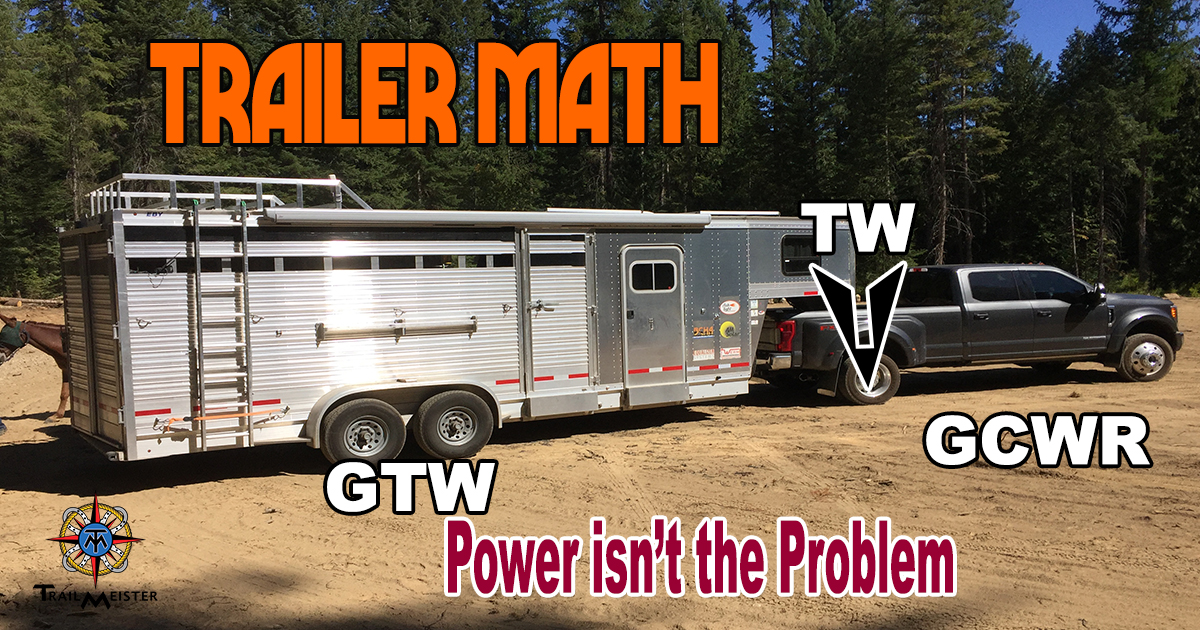
I’ve been getting questions lately as I’ve started offering trailer safety clinics, and a pattern is showing up. The details change, but the core issues don’t. Folks are trying to sort out their towing setups, thinking about different tow vehicles, trailers, and the ways to make it all work. The questions often start with a specific rig in mind, but it’s not really about the vehicles. It’s about the math behind what they’re asking.
“Can I tow an ‘X’ horse trailer with this vehicle?” is one of the most common questions I hear from people driving everything from SUVs to one-ton trucks. The short answer: maybe. The answer that matters depends on the numbers — numbers that don’t care about the badge on the grille.
Most people start with towing capacity because that’s what gets advertised. Big numbers, fancy marketing, and promises that the vehicle can “handle it.” The problem is that towing capacity is rarely the limiting factor in the real world. Payload is. Payload is everything your vehicle has to carry, not pull. That includes tongue weight, passengers, road snacks, tack, hay, water, and all the small things that seem insignificant on their own. These quickly add up once you start loading for a day or weekend with horses.
This is where it catches people off guard. You can have a vehicle rated to tow far more than your trailer weighs. Still, you may run out of payload long before you ever load the horses. That’s not a failure of the tow vehicle. It’s math, and it’s predictable if you take the time to run the numbers before you hitch the trailer.
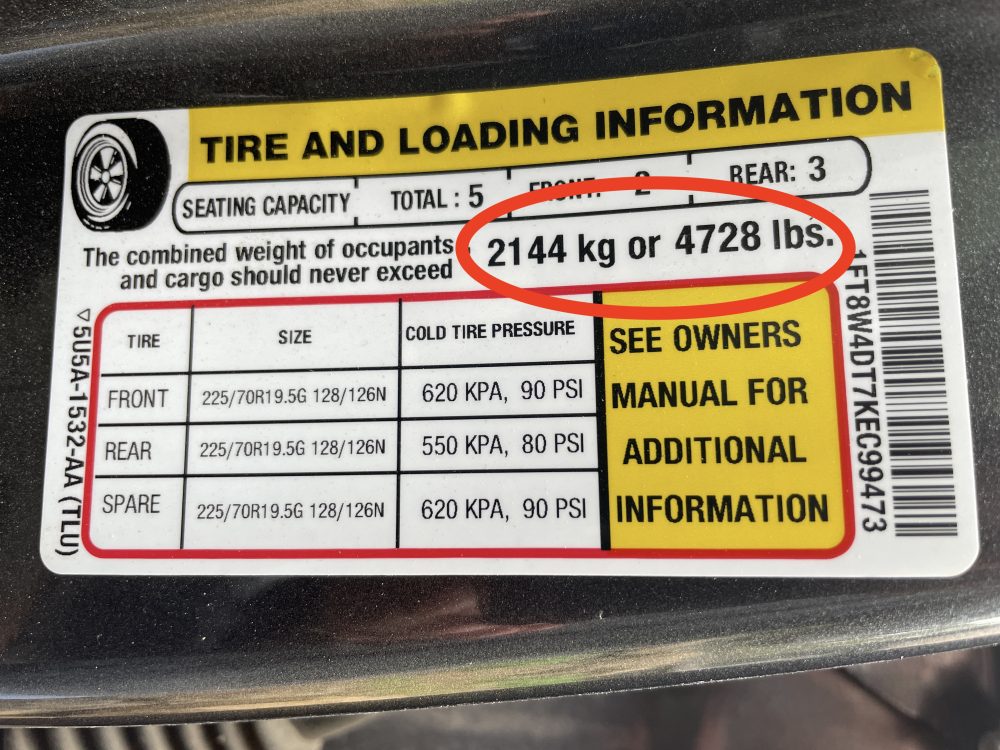
Let’s foot it out in plain terms. Say your tow vehicle has a payload capacity of 1,500 pounds. That number isn’t from a brochure. It’s printed on the driver’s door sticker of your specific vehicle. It reflects what that exact configuration can carry. From there, you start subtracting real weight. Passengers first. It’s worth being honest here. Add in a dog, a cooler, tack, and whatever else ends up in the cab or bed. It’s not hard to be 800 to 1,000 pounds into your payload before the trailer is even part of the equation.
Then you add tongue weight. This is the downward force the trailer applies to the hitch. For most bumper-pull horse trailers, a reasonable estimate is 10 to 15 percent of the loaded trailer weight. The best answer is always to measure directly. If your trailer weighs 5,000 pounds loaded, you’re looking at roughly 500 to 750 pounds of tongue weight. Every bit of that goes straight onto your vehicle’s payload.
Now the math becomes clear. You started with 1,500 pounds of payload and used 900 pounds on people and gear. Now you have 600 pounds left. Your trailer adds 650 pounds of tongue weight. You are now over your payload rating before the horses are even loaded. That’s how people end up with rigs that “should be fine” but don’t feel right once they’re moving down the road.
The symptoms are familiar. The rear squats, headlights illuminate the treetops, and the steering feels light. None of this is surprising when you look at the numbers. The vehicle is simply being asked to carry more than it was designed to handle.
That’s why I encourage people to flip the process. Instead of starting with the vehicle and trying to make it work, start with the trailer, or at least get close enough to understand what you’re really asking of your tow vehicle. If you don’t own a trailer yet, find a comparable model and look up its empty weight and GVWR (the maximum allowable weight when fully loaded). Then estimate its weight based on what you usually carry.
From there, determine tongue weight, ideally with a scale for accuracy. Once you have that, ask a better question: Not “Can I tow it?” but “Can my vehicle carry the weight this trailer puts on it?” That shift moves the conversation from guesswork to informed decisions.
The goal isn’t to make a particular vehicle work at all costs. The goal is to build a towing system that works safely, predictably, and without drama. If the math says you’re on the edge, you’re already too close. Those numbers assume perfect conditions. Real-world driving includes hills, traffic, and moments where you need your vehicle to work without question.
Most towing problems aren’t power issues; they’re math problems. Modern vehicles generally have enough horsepower. What really matters is how much they can safely carry once fully loaded for a horse trip.
If you remember one thing, make it this: Know your payload, determine your tongue weight, and do the math before you hook up. Trust the numbers. This is math, not opinion.
For more of my thoughts on life with mules, trail riding, and camping with livestock, the world’s largest guide to horse trails and camps, and for copies of my books, give me a visit at www.TrailMeister.com. You can also get copies of my books there.